
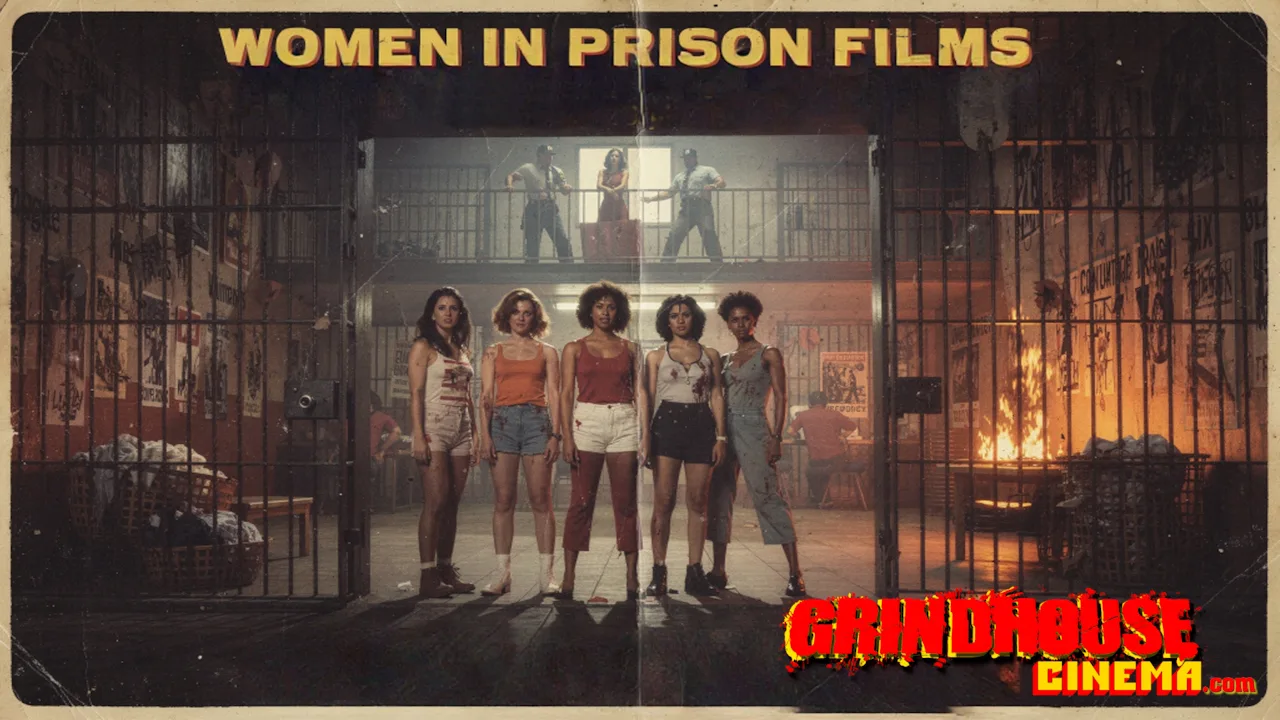
Women in Prison Films: Origins, 1970s Exploitation Boom, and Cult Legacy
Behind Bars and Beyond Morality
Steel doors slam. Keys jingle. A whistle cuts through humid air. Somewhere between pulp fiction and political unrest, a subgenre found its rhythm: Women in Prison films.
On paper, the formula sounds outrageous. Corrupt wardens. Brutal institutions. Catfights in laundry rooms. Riot finales. But reduce it to that and you miss the point entirely.
Because Women in Prison cinema wasn’t just about shock. It was about power.
It was about rebellion.
And in the 1970s — when grindhouse theaters glowed red on city sidewalks and drive-ins flickered under open skies — it became something bigger than exploitation. It became a mirror of its time.
Let’s rewind the cellblock clock.
Before the Shock: Reform Schools and Moral Panic (1950s–1960s)
Long before exploitation posters screamed in bold red lettering, Hollywood was already fascinated with incarcerated women.
1950s reform school dramas often framed imprisonment as a moral lesson. The troubled girl. The stern matron. The inevitable redemption arc. These films were melodramatic but restrained — they promised correction, not chaos.
But by the 1960s, cultural ground was shifting.
-
The Production Code was weakening.
-
Independent distributors were rising.
-
Drive-in theaters were hungry for sensation.
Exploitation producers noticed something simple:
Audiences responded to taboo settings.
A prison was perfect.
It offered:
-
Built-in authority structures
-
Contained environments
-
Conflict without narrative complexity
And once censorship loosened, that environment became a playground for shock-driven storytelling.
The 1970s Explosion: When Sleaze Met Social Rebellion
The 1970s didn’t invent Women in Prison films.
But it weaponized them.
A Decade of Distrust
The Vietnam War. Watergate. Civil rights unrest. Institutional trust was collapsing.
What better metaphor than a prison?
In these films, wardens were rarely noble. Guards were corrupt. Systems were abusive. Authority was something to fight, not respect.
The prison became a microcosm of societal distrust.
And audiences ate it up.
Blaxploitation Influence
When Pam Grier stormed onto screens in films like The Big Doll House (1971), something shifted.
Women in Prison films became:
-
Tougher
-
Louder
-
More rebellious
The passive victim archetype gave way to survivalists.
The riot scene became essential.
The final act wasn’t redemption — it was retaliation.
The European Turn: Eroticism Crosses the Bars
Meanwhile, across the Atlantic, European exploitation filmmakers leaned harder into eroticism.
Italian and Spanish productions merged:
-
Institutional cruelty
-
Erotic tension
-
Sadistic authority figures
The aesthetic became more stylized.
The moral boundaries became blurrier.
And in typical Eurocult fashion, subtlety was not a priority.
The Philippine Jungle Prison Cycle
One of the wildest 1970s branches emerged from the Philippines.
American producers shot tropical prison films featuring:
-
Sweltering jungle compounds
-
Female solidarity arcs
-
Sadistic overseers
-
Escape attempts through dense wilderness
The setting amplified both the physical and psychological tension.
Humidity, mud, sweat, rebellion.
Grindhouse gold.
The Formula: What Makes a Women in Prison Film?
Despite regional differences, the 1970s solidified a recognizable structure:
1. The New Inmate
An outsider enters a hostile system.
2. The Corrupt Authority
Warden or guard abusing power — often symbolic of broader institutional rot.
3. The Hierarchy
Prison gangs. Informal leadership. Survival politics.
4. The Exploitative Set Pieces
Interrogations. Fights. Public punishments. Shower confrontations.
5. The Riot or Escape
The system must collapse — even if only temporarily.
But beneath the surface spectacle, there was something else:
Power inversion.
Women in Prison films frequently ended not in submission, but revolt.
That mattered.
Why 1970s Audiences Loved It
Let’s be honest: the shock factor was part of it.
But that’s not the whole story.
Rebellion Fantasy
In a decade defined by protest culture, these films allowed viewers to watch oppressive systems burn — sometimes literally.
Sexual Transgression
The 70s were the era of sexual revolution. Exploitation cinema pushed boundaries mainstream films still tiptoed around.
Power Dynamics
These films were obsessed with hierarchy — and the breaking of it.
In a strange way, they functioned as chaotic morality plays.
Authority abuses power.
Inmates revolt.
Order collapses.
It’s messy.
It’s cathartic.
It’s very 1970s.
International Variations in the 1970s
United States
Gritty. Political undertones. Blaxploitation crossovers.
Italy
Stylized. Erotic tension amplified. Institutional cruelty exaggerated.
Spain
Blended horror tones with prison narratives.
Philippines
Survivalist jungle settings. Heat-soaked rebellion arcs.
Each country reshaped the formula — but the core remained intact.
Bars. Power. Revolt.
The 1980s: VHS Mutation and Decline
By the 1980s, theatrical grindhouse culture was fading.
Home video changed everything.
Women in Prison films didn’t disappear — they mutated.
Budgets shrank.
Eroticism intensified.
Political subtext faded.
The genre drifted closer to parody or softcore territory.
The riot became optional.
The rebellion quieter.
But the DNA remained.
Legacy: Why Women in Prison Refuses to Die
Modern cult festivals still screen 1970s prison exploitation films.
Why?
Because they represent:
-
A raw era of independent filmmaking
-
A collision between politics and pulp
-
A uniquely grindhouse blend of spectacle and subversion
The subgenre endures not because it was subtle — but because it was fearless.
In a decade that distrusted institutions, these films made rebellion entertaining.
And sometimes, that’s all cult cinema needs.
Essential 1970s Women in Prison Films
- Triangle of Lust (1978) – A European-leaning entry where erotic tension and psychological manipulation intensify the prison framework.
-
Women in Cell Block 7 (1973) -A European variation that amplifies erotic tension and theatrical sadism. The authority figure becomes almost operatic in cruelty — very much in line with Eurocult excess.
-
Born Innocent (1974) – Originally made for television, yet controversial enough to blur boundaries. It reveals how close Women in Prison themes were to entering mainstream discourse.
-
Black Mama White Mama (1972) – A blaxploitation-infused chain-gang escape thriller that fuses Women in Prison tropes with buddy-film intensity. Pam Grier again proves that rebellion sells — and sells hard.
-
Convoy of Girls (1979) – A transitional late-70s entry. The institutional premise remains, but tone begins shifting toward softer edges.
-
The Big Bird Cage (1972) – Faster, louder, and more explosive. It expands the riot narrative and leans into the chaotic spirit that grindhouse audiences demanded.
-
The Big Doll House (1971) – Often credited with igniting the 1970s Women in Prison explosion, this tropical-set riot of sweat, rebellion, and corruption turned the subgenre into grindhouse gold. Pam Grier’s presence alone shifted the tone from victimhood to defiance. If WIP has a founding document, this is it.
-
Lost Souls (1980) – Straddling decades, it reflects the fading theatrical grindhouse era and the coming dominance of home video aesthetics.
-
The Big Bust-Out (1972) – A classic prison-break structure wrapped in exploitation grit. Institutional cruelty here is less metaphor, more spectacle.
-
Schoolgirls in Chains (1973) – A transitional work linking reform school melodrama to full-blown exploitation. It bridges 1950s morality tales and 1970s institutional chaos.
-
Bare Behind Bars (1980) – A Latin American variation that injects stylistic flair into the established formula, extending the subgenre’s lifespan into the 80s.
-
House of Whipcord (1974) – A British take that merges prison discipline with gothic punishment aesthetics. Institutional horror meets WIP structure.
-
Caged Heat (1974) – Jonathan Demme’s early entry adds irony and sharper social commentary. It retains exploitation spectacle while subtly critiquing the system it portrays.
-
The Hot Box (1972) – A tropical prison setting infused with 70s political tension. It blends rebellion fantasy with raw exploitation aesthetics — less subtle, more electric.
-
Ilsa, Harem Keeper of the Oil Sheiks (1976) – Transplanting the formula into a different oppressive setting, it retains the power hierarchy obsession while escalating spectacle.
-
Ilsa She Wolf of the SS (1975) – A controversial but culturally undeniable crossover between Naziploitation and Women in Prison themes. The sadistic authority archetype reaches exaggerated extremes.
-
Ilsa, The Wicked Warden (1977) – A direct return to prison structure. By this point, the tyrannical warden is no longer subtle — she is the brand.
-
Sweet Sugar (1972) – A stylized take on jungle imprisonment, with a stronger emphasis on solidarity and resistance. It captures the decade’s appetite for institutional breakdown and cathartic uprising.
-
Riot in a Women’s Prison (1974) – As the title promises, rebellion is central. The riot isn’t just an act — it’s the genre’s emotional release valve.
-
Hitler’s Last Train (1977) – Transport narrative meets prison structure. The institutional setting shifts, but the hierarchy of domination remains central.
-
The Muthers (1976) – Jungle survival, sisterhood, and resistance. It carries the pulp energy while foregrounding female solidarity in a way that defined mid-70s variations.
-
1,000 Convicts and a Woman (1971) – An early, harder-edged exploration of confinement and transgression. It establishes the subgenre’s willingness to shock.
-
Prison Girls (1972) – Darker in tone and more psychologically grounded, this entry shows that Women in Prison films could lean toward drama without losing their pulp bite.
-
Convicts Women aka Bust out (1973) – A straight-to-the-point institutional rebellion narrative. The formula is clear, tight, and unapologetically grindhouse.
-
Escape From Womens Prison (1978) – Escape becomes the focus. The rebellion fantasy is front and center, with the collapse of authority as the ultimate payoff.
-
Love Camp (1977) – Another Naziploitation crossover that blends carceral themes with 70s shock aesthetics. Institutional domination becomes theatrical and excessive.
-
Gestapo’s Last Orgy (1977) – Dark, nihilistic, and deeply unsettling. Here the prison metaphor becomes almost existential.
-
Nightmare in Badham County (1976) – A more grounded and disturbing American variation. It leans into realism, stripping away some pulp exaggeration for harsher institutional commentary.
-
Women Behind Bars (1975) – A straightforward but effective representation of the genre’s core dynamic: authority, abuse, and revolt.
-
SS Camp 5: Women’s Hell (1977) – An archetypal Naziploitation entry that amplifies institutional cruelty to grindhouse extremes.
-
Nazi Love Camp 27 (1977) – A stark reminder of how far 70s exploitation was willing to push boundaries. Controversial, relentless, and very much of its era.
-
Women in Cages (1971) – Jungle humidity, sadistic authority, and institutional cruelty distilled into pure drive-in energy. The film locks in the genre’s core formula: oppression, hierarchy, and inevitable revolt.