Sleaze Horror: Eurocult Sin, Occult Heat, and the Nightmare Aesthetic of Late-Night Cinema
When Horror Got a Little Too Comfortable in the Dark
Sleaze Horror is what happens when horror stops pretending it’s polite.
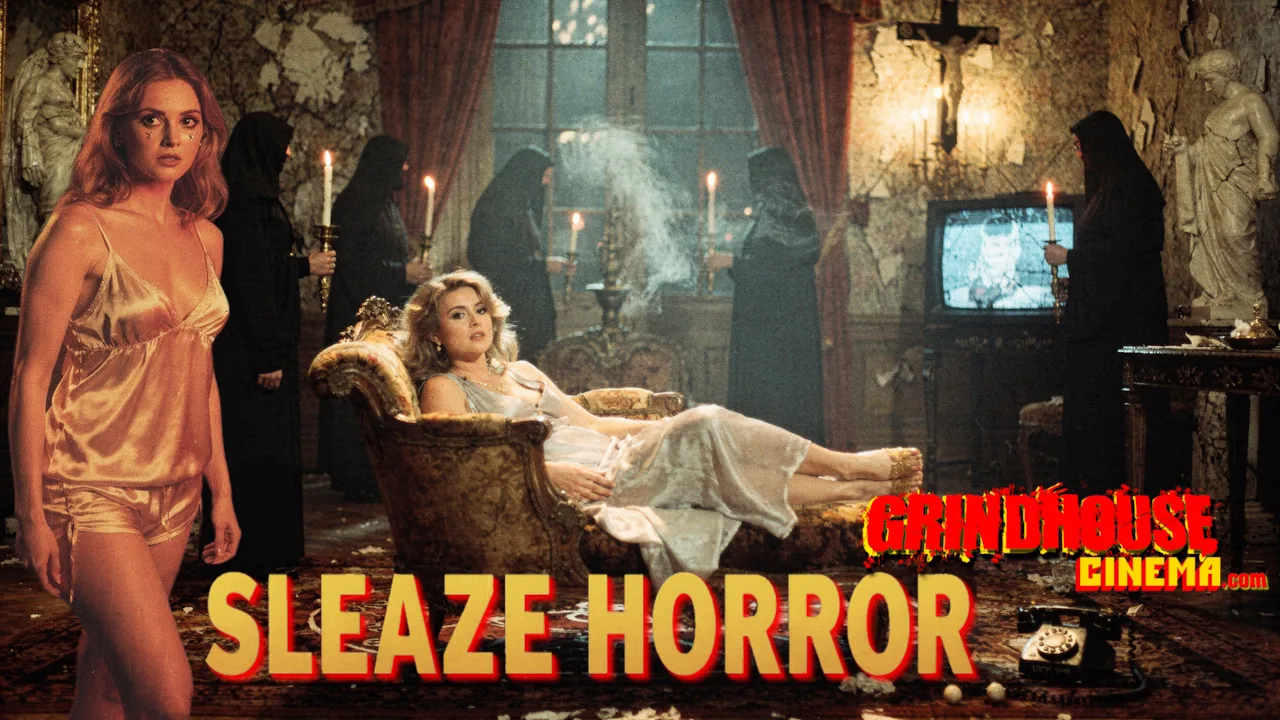
It’s not the clean, respectable “boo!” of mainstream genre entertainment. It’s the late-night stuff—films that feel like they were discovered, not released. The kind that smell faintly of incense, cigarette smoke, and questionable decisions. The kind that blur the border between seduction and danger, where the atmosphere is sticky, the morals are slippery, and the camera seems fascinated by the fact that fear can be… strangely hypnotic.
That’s the core of Sleaze Horror: erotic tension as atmosphere, not just provocation—woven into gothic decay, occult rituals, vampires, living-dead nightmares, and Eurocult surrealism.
It’s horror that doesn’t simply want to scare you.
It wants to lure you into a mood.
And once you’re there, it makes the nightmare feel weirdly intimate.
What “Sleaze Horror” Actually Means
Sleaze Horror isn’t one single official genre label. It’s a cult ecosystem—a space where several traditions overlap:
- Euro-horror (gothic castles, fog, cursed bloodlines)
- occult cinema (rituals, demons, possession, black magic)
- erotic thrillers that drift into horror territory
- living-dead / zombie-adjacent nightmare films with sensual decay
- surreal Eurocult where logic is optional but vibes are mandatory
The defining feature isn’t a single monster.
It’s the tone:
- sensual dread
- decadent settings
- voyeuristic unease
- hypnotic pacing
- and a constant feeling that desire and danger are sharing the same room
Why Europe Excelled at This
European genre cinema—especially in the 1970s and early 1980s—was uniquely positioned to create Sleaze Horror because it had:
- looser censorship climates than many mainstream markets
- a thriving co-production ecosystem
- a distribution model that rewarded taboo and atmosphere
- a tradition of gothic and surreal art influences
Eurocult filmmakers didn’t treat eroticism and horror as incompatible. They treated them as natural partners: desire makes people reckless; recklessness invites nightmares.
That’s basically the subgenre’s mission statement.
The Aesthetic: How Sleaze Horror Looks and Feels
Even when the budgets are uneven, Sleaze Horror tends to share a recognizable visual language:
- decaying interiors: mansions, castles, convents, isolated houses
- ritual imagery: candles, chanting, sigils, forbidden rooms
- nighttime textures: fog, shadows, wet streets, dim lamps
- soft-focus seduction that slips into menace
- hypnotic pacing: less jump-scare, more slow contamination
This is why the best titles feel like you’re watching a dream turn sour in real time.
Occult Heat: Rituals, Demons, and the Seductive Nightmare
Occult horror is one of the major engines of Sleaze Horror. The devil isn’t always a monster with horns. Sometimes it’s a mood: a whisper, an invitation, a “come closer” energy that disguises danger as fascination.
Eurocult occult films often treat ritual like performance:
- the camera lingers
- the atmosphere thickens
- the line between curiosity and compulsion disappears
This is where titles like Enter the Devil (1974) and Devil’s Nightmare (1971) live: horror built from dread, temptation, and the feeling that the world is quietly compromised.
Vampires, Gothic Decay, and Erotic Shadows
Vampire cinema is practically built for Sleaze Horror.
It combines:
- seduction
- ritual
- blood as metaphor
- night as theater
- and a predator/prey dynamic that is both intimate and terrifying
But Eurocult vampire films often go beyond classic Dracula archetypes. They drift toward surrealism, dream logic, and strange emotional detachment—like gothic romance infected by modern rot.
That’s why vampire-adjacent titles can sit comfortably beside occult nightmares and living-dead decay inside the same Sleaze Horror silo.
The Living Dead Branch: Beauty Rotting in Slow Motion
Sleaze Horror also overlaps with a very specific strain of Euro zombie / living-dead cinema: films where decay is presented with an almost poetic, elegiac mood.
These aren’t always “action zombie” movies. They’re often:
- slow
- dreamlike
- intimate
- and obsessed with the boundary between life and death as a sensual nightmare
This is where certain early-80s Eurocult titles become essential to the Sleaze Horror identity. The horror is less about chase and more about contamination—emotional, physical, spiritual.
Why This Subgenre Still Hits
Because it offers something mainstream horror often avoids:
atmospheric risk.
Sleaze Horror is not built for universal comfort. It’s built for late-night curiosity. It’s horror that understands the viewer’s fascination is part of the experience—this uneasy attraction to the forbidden, the strange, the decadent.
It also serves as a map of exploitation-era creativity: when filmmakers could bend genre boundaries, lean into mood over logic, and turn taboo aesthetics into cult mythology.
If you want to understand grindhouse-era Eurocult, Sleaze Horror isn’t optional. It’s one of the most revealing corners of the whole ecosystem.
Essential Sleaze Horror Films
- Devil’s Nightmare (1971) — A classic Euro-occult nightmare with gothic atmosphere and a “something is not right” tension that never fully relaxes.
- Enter the Devil (1974) — Occult dread with a seductive pull: the kind of film where curiosity feels like the first step into a trap.
- Night of the Sorcerers (1973) — Exotic horror and occult energy collide, creating a pulpy ritual-nightmare atmosphere.
- The Dracula Saga (1973) — A vampire/gothic variation that leans into Eurocult mood: shadowy romance, dread, and decadent decay.
- The Living Dead Girl (1982) — One of the strongest examples of “beauty rotting in slow motion” Euro horror: dreamy, tragic, and deeply unsettling in tone.
- Erotic Nights of the Living Dead (1980) — A Eurocult mutation that fuses island isolation, dread, and sensual atmosphere into a late-night fever-dream.
- Morbus (1983) — Surreal and unstable, with Eurocult logic bending into nightmare territory. A good example of the subgenre’s “dreams collapse into each other” vibe.
- Macumba Sexual (1983) — Jess Franco-style erotic mysticism: hypnosis, ritual mood, and a haunted sensuality that feels more like a spell than a plot.
- Malabimba (1979) — A notorious late-70s occult-tinged entry where the atmosphere is as uncomfortable as it is hypnotic.
- Draguse (or the Infernal Mansion) (1976) — Gothic space as character: the kind of film where the building itself feels complicit.
- Fear Has 1000 Eyes (1970) — A paranoia-soaked early-70s piece that shows how easily thriller unease can slide into horror dread.
- The Rape of the Vampire (1968) — A key early surreal-vampire artifact: more avant-ritual than conventional horror, and important for the Eurocult lineage.
- Sex Demon (1975) — A title that signals the subgenre’s core fusion: temptation and nightmare occupying the same frame.
- Satan’s Baby Doll (1982) — A grimy, transgressive Euro-horror oddity where the shock-aesthetic and the occult mood reinforce each other.
- Hellish Flesh (1977) — An exploitation-horror hybrid with a sweaty, late-70s menace—perfect for mapping the grindhouse edge of the subgenre.