
Directed by: Edgar G. Ulmer
Stars: Patricia Conelle, Don Roberts, Arianne Ulmer, Wynn Gregory, Doris Shriver
Language: English
Country: Usa | Imdb Info
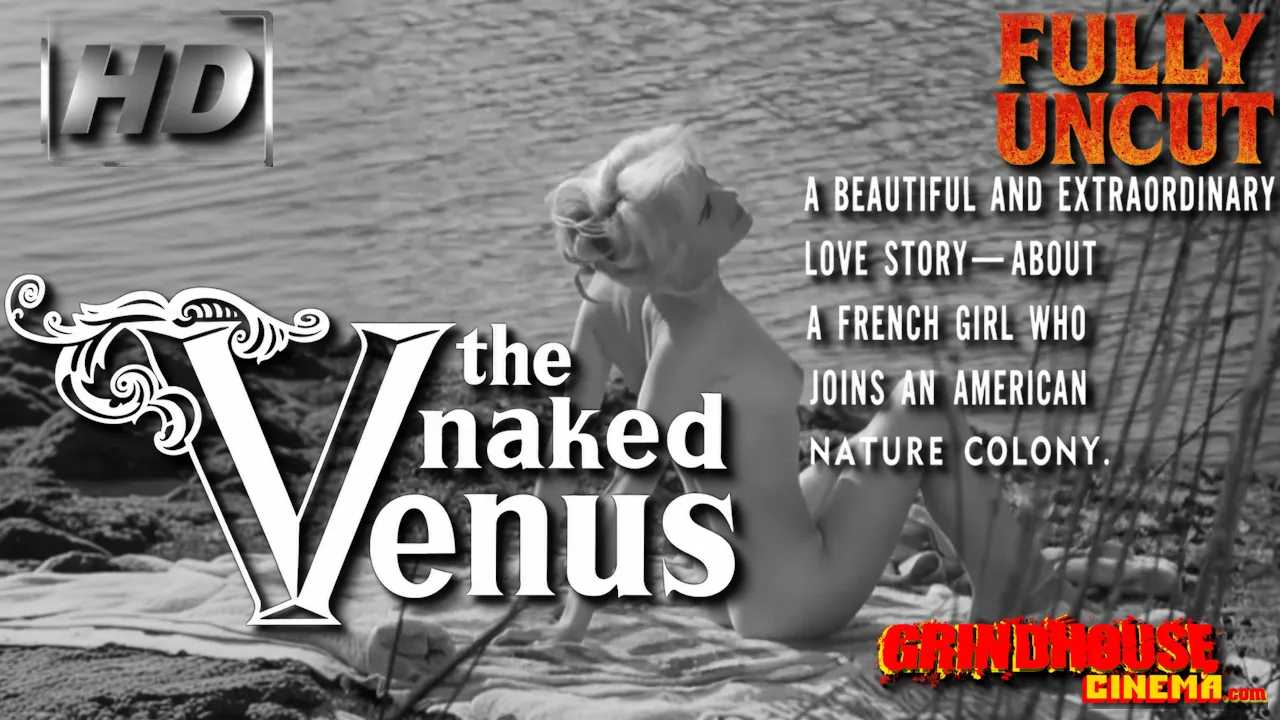
Description: After completing his military service in Korea, American painter Robert “Bob” Dixon settles in Paris to study art. There he meets Yvonne Duval, a French model whose beauty, independence, and relaxed attitude toward the human body inspire both his affection and his most successful painting.
They marry and have a daughter, Sherie.
Bob’s portrait of Yvonne, titled The Naked Venus, is purchased by a respected New York museum, giving him the first real recognition of his career. Yet he has concealed an important part of his life from his wealthy and domineering mother, Mary Lou Dixon: she knows nothing about either his French wife or her granddaughter.
When Bob’s father dies, he decides that the family must leave Paris and return to California. Yvonne fears that his mother will never accept her, but Bob insists that duty requires him to remain close to the woman who raised him.
Yvonne’s concerns are immediately justified.
Mary Lou views her daughter-in-law as a foreign intruder who has stolen Bob’s loyalty. Her hostility intensifies when she discovers that Yvonne once worked as an artist’s model and belongs to a family comfortable with naturism. What Yvonne regards as a healthy, private way of life becomes, in Mary Lou’s hands, evidence of moral corruption.
Bob is unable to defend his wife.
Years beneath his mother’s influence have left him emotionally weak and easily manipulated. Although he loves Yvonne and Sherie, he repeatedly allows Mary Lou to question their marriage, insult Yvonne’s character, and present maternal obedience as his highest responsibility.
While Bob is away, attorney John Rutledge arrives at the house and informs Yvonne that her husband has filed for divorce. Stunned by the apparent betrayal, she leaves the Dixon home with Sherie and seeks refuge among friends at a California naturist colony.
The colony is presented as the opposite of Mary Lou’s household. Its residents speak openly, treat the body without shame, and live without the constant surveillance of conventional society. Their unclothed state is less important than the absence of secrecy, manipulation, and judgment.
But Mary Lou refuses to let Yvonne disappear quietly.
She argues that a woman who practices naturism cannot be considered a suitable mother. The divorce dispute becomes a custody battle, with Yvonne’s private choices placed before a courtroom as though they were evidence of criminal behavior.
Represented by attorney Lynn Wingate, Yvonne must defend not only her right to raise Sherie but the principle that nudity does not automatically equal indecency. Witnesses are called to discuss art, morality, personal freedom, and the difference between naturalism and voyeurism.
Among the evidence is secretly filmed footage of Yvonne bathing at a French naturist retreat. The images were obtained by a private investigator, turning the trial’s moral argument inside out: the woman being watched is accused of indecency, while the man who invaded her privacy is treated as respectable.
The museum director who purchased Bob’s painting also testifies. He argues that the human body has always belonged to serious art and that private participation in naturism has no bearing on Yvonne’s ability to love and care for her child.
As the courtroom testimony continues, Mary Lou’s campaign appears less like concern for Sherie than an attempt to reclaim complete control over her son. Her supposed defense of family values is exposed as a mixture of possessiveness, social prejudice, and material authority.
Bob finally begins to understand what his silence has allowed.
Forced to choose between his mother’s approval and the family he created in Paris, he breaks under the pressure of the proceedings. The court refuses to accept the simple equation of nudity with immorality, leaving Bob and Yvonne with the possibility of reconciliation—but only if he can finally become independent of his mother.
The Naked Venus is far more serious than its exploitation title suggests. Although it contains the naturist-colony footage expected by its original audience, the film uses that material to construct a courtroom melodrama about marriage, motherhood, artistic freedom, and the social manufacture of shame.
Legacy Note:
Directed by Edgar G. Ulmer under the one-time pseudonym Ove H. Sehested, The Naked Venus stands apart from the typical nudist-camp films that circulated through American exploitation theaters during the late 1950s.
Most naturist pictures of the period were lightly fictionalized travelogues designed primarily to present footage that conventional censorship would otherwise prohibit. Ulmer’s film instead places naturism inside a developed domestic conflict, using the custody trial to examine who has the authority to define morality.
Patricia Conelle plays Yvonne as a composed but emotionally wounded woman whose openness is repeatedly mistaken for weakness. She is not ashamed of having modeled for artists or visited naturist colonies, but she understands that American respectability can transform those harmless choices into weapons against her.
Don Roberts’ Bob is deliberately frustrating. His failure is not that he stops loving Yvonne, but that he lacks the courage to protect her from his mother. The film treats his dependence as a moral weakness more destructive than any behavior attributed to his wife.
As Mary Lou, Wynn Gregory embodies possessive respectability. She never considers herself cruel; every manipulation is justified as concern for her son, granddaughter, or family name. That certainty makes her more threatening than a conventional melodramatic villain.
Ulmer’s daughter Ariane Arden appears as Lynn Wingate, the attorney who gives Yvonne the strongest defense in the film. The courtroom is largely controlled by women, with Yvonne, Mary Lou, and Wingate representing radically different ideas about motherhood, independence, and social power.
The movie’s opening images are especially revealing. Yvonne is filmed from a distance while bathing in a natural landscape, unaware that a detective is recording her. The sequence appears to offer the audience forbidden nudity while simultaneously identifying the act of observation as an invasion.
That contradiction runs throughout the film. The naturists are accused of shamelessness because they do not hide their bodies, while respectable society secretly watches, photographs, judges, and attempts to control them. The real obscenity, the film suggests, lies not in being seen but in looking at another person solely to obtain power over them.
Classical music, solemn compositions, and carefully arranged group scenes give the naturist colony an idealized dignity. The presentation can seem overly earnest, yet its seriousness distinguishes the film from the cheerful volleyball-and-sunbathing formulas that would soon dominate the genre.
Uneven performances and heavy courtroom dialogue sometimes pull the film toward soap opera, but its argument remains unexpectedly progressive for 1959. Yvonne is defended not because naturism is proven fashionable or harmlessly eccentric, but because private freedom should not disqualify a woman from marriage or motherhood.
For collectors of exploitation cinema, The Naked Venus is a fascinating contradiction: a nudist picture skeptical of voyeurism, a sensationally advertised film that argues against sensational judgment, and a low-budget melodrama with a sincere interest in art, freedom, and the hypocrisy concealed beneath respectable clothing.
Members Only Video
Film information, full movie description, and selected notes are available to all visitors. Screenshot galleries and restored uncut streaming videos are available only for active members.
Already registered? Please log in to watch this movie.