

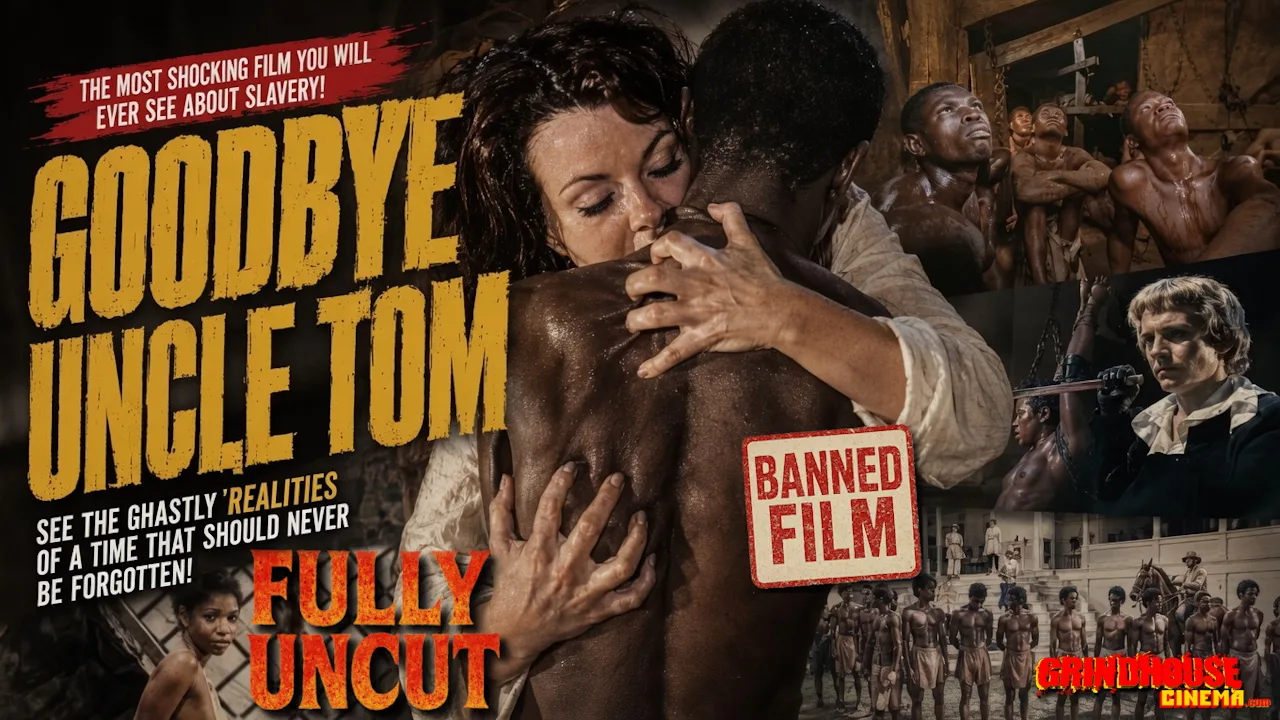
Directed by: Gualtiero Jacopetti, Franco Prosperi
Stars: Stefano Sibaldi, Dick Gregory, Gualtiero Jacopetti, Susan Hampshire
Language: Italian | Subtitles: English
Country: Italy | Imdb Info
Also known as: Addio zio Tom, White Devil: Black Hell, Farewell Uncle Tom
Description: Two documentary filmmakers appear to travel back through time into the pre-Civil War American South, carrying their cameras into a society built on slavery. Rather than following one central character, Goodbye Uncle Tom moves through a series of staged encounters, presenting the slave economy as an entire world of commerce, ideology, routine, and institutional cruelty.
The filmmakers observe markets, plantations, wealthy households, religious justifications, and the bureaucratic systems used to reduce human beings to property. Slave owners, traders, officials, and bystanders address the camera with a chilling matter-of-factness, treating systematic dehumanization as though it were simply an ordinary part of daily life.
That detached pseudo-documentary approach is the film’s central device. Instead of offering the emotional safety of a conventional historical drama, the movie forces the viewer into the position of an uncomfortable witness. The camera does not provide a heroic figure to follow or an easy path toward redemption. It keeps returning to the machinery of oppression itself: the language, customs, transactions, and social structures that allowed an entire economy to function through calculated brutality.
As the film moves toward the modern era, it begins drawing deliberately provocative connections between the historical legacy of slavery and racial conflict in twentieth-century America. The result is not a balanced history lesson or a restrained period piece. It is a confrontational mondo-style collage designed to disturb, provoke, and leave the audience arguing about both its subject and its methods.
Legacy Note:
Goodbye Uncle Tom remains one of the most controversial films associated with the mondo tradition. Directed by Gualtiero Jacopetti and Franco Prosperi, the team behind Mondo Cane and Africa Addio, it combines vast crowd scenes, elaborate historical staging, documentary-style narration, and a haunting Riz Ortolani score to create something visually impressive and ethically deeply uneasy.
The film presents itself as an indictment of slavery, yet its relentless emphasis on degradation has always divided audiences and critics. Some view it as an uncompromising attempt to strip away the comforting distance of conventional historical cinema. Others argue that its shock tactics reproduce the very exploitation it claims to condemn. That contradiction cannot be separated from the film’s legacy.
It is neither an easy recommendation nor an ordinary exploitation title. It survives as a difficult, troubling artifact of early-70s shock cinema: technically ambitious, historically provocative, and impossible to discuss without confronting the moral discomfort built into the way it was made.
Teaser:
Members Only Video
Film information, full movie description, and selected notes are available to all visitors. Screenshot galleries and restored uncut streaming videos are available only for active members.
Already registered? Please log in to watch this movie.