

When a Country Finally Exhaled on Screen
Some film movements begin with a new camera technique.
Some begin with a breakout hit.
Spain’s Clasificada “S” era began with something far more explosive:
a locked door finally swinging open.
For decades, Spanish cinema had lived under the weight of censorship, Catholic moral policing, and authoritarian control. Under Francisco Franco’s dictatorship, filmmakers operated inside a system where desire, political dissent, social discomfort, and even ordinary human messiness could become problems requiring cuts, disguises, or complete avoidance.
Then Franco died in 1975.
And Spanish cinema did not politely loosen its collar.
It tore the shirt open, lit a cigarette, turned up the soundtrack, and started making up for lost time.
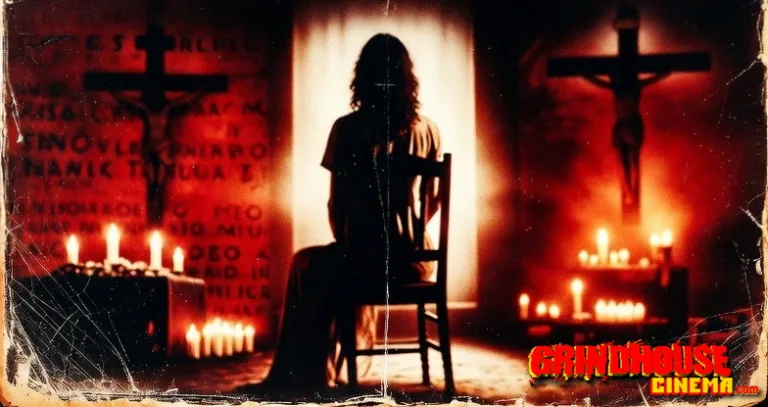
That wild release is the subject of Exorcismo: The Transgressive Legacy of Clasificada “S”, Alberto Sedano’s documentary narrated by Iggy Pop. But the word exorcismo means more here than horror-movie possession. It describes a cultural purge — a country trying to drive out decades of repression through cinema.
The result was not one tidy genre.
It was a storm.
What Was the Clasificada “S” Rating?
As Spanish censorship weakened during the transition to democracy, a new classification appeared for films considered especially provocative or potentially disturbing to viewers.
The “S” rating became associated with material that pushed against ordinary boundaries:
- erotic content
- horror and violent imagery
- political discomfort
- social taboo
- religious provocation
- moral ambiguity
- and the general sense that polite society might prefer the film not exist at all
In theory, the classification was a warning.
In practice, it became marketing.
An “S” rating told audiences that a film might contain something forbidden, excessive, dangerous, or just plain weird.
For producers and distributors, that was not necessarily bad news.
It was a poster hook.
From Repression to Overcorrection
When a culture has been restrained for decades, freedom rarely arrives in measured doses.
It arrives hungry.
The post-Franco cinema explosion was messy, contradictory, and deeply alive. Some filmmakers used the changing climate to explore politics, identity, sexuality, trauma, and social hypocrisy with real seriousness. Others saw a newly permissive market and raced toward anything that might fill a theater.
Naturally, many films did both at once.
That is where Clasificada “S” cinema becomes fascinating.
It sits at the intersection of:
- cultural rebellion
- grindhouse economics
- Euro-horror style
- political transition
- erotic experimentation
- low-budget opportunism
- and the irresistible human urge to see what was previously forbidden
Some films were thoughtful.
Some were shameless.
Some were both thoughtful and shameless before the opening credits had finished.
That instability is not a flaw in the movement.
It is the movement.
Horror as a Release Valve
Spanish horror did not begin after Franco, of course.
The country already had major genre voices and enduring cult figures. Paul Naschy’s lycanthropic nightmares, Narciso Ibáñez Serrador’s psychological dread, Amando de Ossorio’s Blind Dead cycle, and earlier gothic work by Jess Franco had already pushed Spanish horror into international circulation.
But the transition period changed the temperature.
Horror could now become more openly feverish, more political, more erotic, and less apologetic about its own bad dreams.
Films such as:
- The Werewolf Versus the Vampire Woman
- The House That Screamed
- Tombs of the Blind Dead
- Horror Rises from the Tomb
- The Blood Spattered Bride
- Who Can Kill a Child?
- Satan’s Blood
- The Killer of Dolls
- and Beyond Terror
show how broad the Spanish genre landscape had become.
Some leaned into gothic atmosphere.
Some turned social anxiety into nightmare fuel.
Some blurred erotic tension and occult dread.
Some simply behaved as though genre boundaries were suggestions written in pencil.
Spanish horror did not need to choose between elegance and sleaze.
It could have both.
Preferably in the same scene.
The Political Edge: Eloy de la Iglesia and the Cinema of Discomfort
One of the key names in this story is Eloy de la Iglesia, a filmmaker whose work repeatedly pressed against the nerves of Spanish society.
His films were not interested in tidy morality. They explored class resentment, religious tension, political unease, social repression, and characters drifting through systems that had already failed them.
The Cannibal Man used murder and paranoia to expose something rotten beneath ordinary urban life.
The Priest pushed against the pressure cooker of religious repression.
Confessions of a Congressman moved into the political and personal contradictions of a changing society.
Later work such as El pico would continue exploring the social wounds of post-Franco Spain.
For de la Iglesia, exploitation was not merely a sales tool.
It was a crowbar.
Jess Franco: The Restless Ghost in the Machine
Naturally, no journey through transgressive Spanish cinema can stay far away from Jess Franco.
Franco had already built an international career by the time the Clasificada “S” era fully arrived. He was too prolific, too restless, and too allergic to neat classification to belong to one period alone.
But he fits the movement perfectly.
His films treat genre like a fever dream:
- gothic horror
- erotic obsession
- pulp adventure
- occult drift
- jazz-soaked melancholy
- prison-film grime
- and surreal detours that seem to exist because the camera wandered into the wrong hotel room and decided to stay
Titles such as Macumba Sexual, Erotic Symphony, Female Vampire, Vampyros Lesbos, She Killed in Ecstasy, The House of Lost Women, and Devil Hunter reveal the strange reach of his cinema.
Franco did not simply make provocative films.
He made films that felt as though provocation had become weather.
José Ramón Larraz: Desire, Isolation, and the Beautiful Wrong Turn
Another major figure is José Ramón Larraz, whose cinema frequently drifts into the uneasy space where erotic tension and danger share the same room.
Larraz’s films can feel elegant, feverish, and quietly diseased in the best possible Eurocult sense. They often operate through isolation, psychological imbalance, and the sense that desire is never arriving alone.
Vampyres, Whirlpool, The Coming of Sin, and Black Candles belong naturally in the Clasificada “S” conversation because they reflect a broader Spanish genre instinct:
do not separate beauty from dread too cleanly.
Let them contaminate each other.
Ignacio F. Iquino and the Industrial Instinct
Not every important figure in this era approached transgression like an auteur building a personal mythology.
Some understood it as an industry.
Ignacio F. Iquino was one of the defining examples of that practical, adaptable, market-aware instinct. His cinema moved across trends and taboos with the restless energy of a filmmaker who understood that audiences were changing fast and posters had to change even faster.
Titles such as:
- Criminal Abortion
- and Bloody Sect
belong to a rougher, more commercially aggressive side of the Clasificada “S” landscape.
These films remind us that liberation and exploitation were not opposites.
They frequently occupied the same theater.
Why the “S” Era Was So Unstable — and So Interesting
The most revealing thing about Clasificada “S” cinema is that it refuses to become one coherent shelf.
It includes:
- politically charged dramas
- occult horror
- rural nightmare films
- erotic thrillers
- urban sleaze
- transgressive comedy
- post-apocalyptic paranoia
- social realism
- strange hybrids
- and films that appear to have been invented during a very long night in a very smoky room
This variety matters.
Spain’s transition to democracy did not create one clean cinematic language because the country itself was undergoing a massive cultural renegotiation.
What could be shown?
What could be said?
What could be mocked?
What could finally be confronted?
What could be sold?
And what would audiences line up to see simply because they had been told they probably should not?
The “S” label became a messy answer to all of those questions at once.
Essential Clasificada “S” and Post-Franco Spanish Cult Films
The Bell from Hell (La campana del infierno, 1973)
A psychologically unstable rural nightmare with a cruel, uncanny edge — one of the strongest bridges between arthouse unease and Spanish genre darkness.
Creation of the Damned (El refugio del miedo, 1974)
A nuclear bunker turns into a psychological pressure chamber as survival, paranoia, and moral collapse feed on one another underground.
The Devil’s Exorcist (El juego del diablo, 1975)
Religious tension, horror imagery, and a culture wrestling with the weight of old authority.
The People Who Own the Dark (Último deseo, 1976)
A bleak and unusual Spanish apocalypse story where privilege, isolation, and social collapse collide.
Battered Flesh (Carne apaleada, 1978)
A grim institutional drama that reveals how exploitation cinema could overlap with anger, cruelty, and social criticism.
The Priest (El sacerdote, 1978)
Eloy de la Iglesia turns religious repression into emotional combustion.
Sins of a Nympho (Bacanal en directo, 1979)
A deliberately uncomfortable destape-era artifact where permissiveness curdles into unease.
Satan’s Blood (Escalofrío, 1978)
One of the essential occult fever dreams of Spanish horror: ritual atmosphere, modern anxiety, and slow contamination.
The Killer of Dolls (El asesino de muñecas, 1975)
A strange, psychologically unstable cult item with the unmistakable energy of a film that could only have emerged from this era.
Dimorfo (1980)
A deeply unusual genre mutation — obscure, difficult to categorize, and exactly the kind of discovery that makes cult-cinema archaeology worthwhile.
Bloody Sex (Sexo sangriento, 1981)
A raw collision of horror and exploitation instincts.
Morbus (1983)
Surreal, unstable, and gloriously off-center: a title that feels like several forms of Eurocult decay merging under pressure.
Beyond Terror (Más allá del terror, 1980)
A delinquent-cinema nightmare colliding with horror excess.
Human Animals (Animales racionales, 1983)
A transgressive survival parable with a deliberately unsettling premise.
Why Exorcismo Matters Now
Cult film history has a bad habit of simplifying countries into a few export names.
Italy gets giallo, cannibal films, and poliziotteschi.
Australia gets Ozploitation.
The Philippines gets jungle exploitation.
Spain is too often reduced to Jess Franco, Paul Naschy, and a handful of gothic horror classics.
But the real landscape is much stranger and much richer.
Exorcismo: The Transgressive Legacy of Clasificada “S” helps recover that missing terrain. It presents Spanish exploitation not as a footnote, but as a cultural aftershock — the messy, fascinating result of a society trying to negotiate freedom after years of restriction.
These films were not all masterpieces.
That is not the point.
Some are elegant.
Some are abrasive.
Some are politically sharp.
Some are opportunistic.
Some are complete lunacy.
But together, they reveal something important:
when censorship finally loosened its grip, Spanish genre cinema did not quietly step into the light.
It kicked the door down.
Explore More Films Referenced in Exorcismo
Add internal links here to available titles from the complete documentary reference list.
Related Pages
- Sleaze Horror: Sin, Occult Heat and the Nightmare
- Naziploitation Cinema: 1970s Taboo Marketing
- Giallo Cinema: Italian Thriller Culture
- Cannibal Cinema: Italian Cycle of the 1970s and 1980s
- Jess Franco: The Restless Genius of Eurocult
- Erotic Cinema in the 1970s
- Emanuelle and Euro Erotica
- Women in Prison Exploitation: 1970s History
- Grindhouse Subgenres
- What Makes a Film a Grindhouse Film?
- What Is Grindhouse Cinema?